
1. Remiss
Epigraph
Epigraph
Therefore* the nobles and common people being situated in their proper places,
They who are on the other side keep the Queen.
And thus they retain all the strength and fortitude in the kingdom.
*Therefore is an archaic meaning of wherefore and makes the most sense in this context.
August 1548
While Lymond awaits trial, set for August 8, Will Scott engages in a "frenzy of inactivity," Buccleuch returns to the siege of Haddington, Richard stays at Midculter but prepares to travel to Edinburgh by the 8th, and Sybilla heads out to who knows where to do who knows what.
***
August 1, 1548
Sybilla, "the calm within the hurricane," lays out the story of who sent Mariotta the jewels and why: Andrew Hunter sent them in hopes of luring Mariotta away from Richard. As a rich widow, she would solve all Dandy's financial problems. But Mariotta, infatuated with Lymond, assumed the jewels were from him. Once she confided her suspicions to Dandy, he was flummoxed at first but quickly adapted his plan to let Mariotta believe it was Lymond sending the jewels. This still served Dandy's purpose, which was to create a rift between Mariotta and Richard. Mariotta in fact still believes Lymond sent the jewels. But Sybilla knows better. Furthermore, she knows Andrew Hunter has tried to kill Richard four times:
- At the papingo shoot.
- At the Nith crossing.
- With a poisoned drink.
- Using the three gypsies on the road.
The papingo shoot: After initially trying and failing to slip away from Mariotta and Agnes, Dandy finally extricated himself with just enough time to position himself "on the flat" from which he would be able to loose his arrow and hit Richard right after Lymond finished shooting at the parrot. Everyone (except Sybilla) assumed it was Lymond who shot his brother. Dandy was trying to kill Richard. Fortunately, he was rushed and not in a good enough position to succeed.
The Nith crossing: Dandy purposely led Richard and Agnes into deep, swirling, treacherous waters. They both would have drowned--and very nearly did--had Richard not been an exceptionally good swimmer and also kept his wits about him. Once Hunter realized Richard and Agnes were not drowned, he had no choice but to assist them out of the river.
The herbal drink: Sybilla mentions this in Pt 3, Ch II, Sec 1.
“Oh, Richard. Dandy Hunter brought one of his mother’s appalling herbal concoctions under oath to make you take it on your next campaign, but I haven’t the heart to inflict it on you...."But wise Sybilla, already suspicious of Dandy, checked out the concoction and determined it was poison. Not wanting to tip off Hunter, she said she would lie to him and encouraged Richard to do the same: "I shall tell Dandy you drained every drop and left in a condition of enteric rapture: only remember to fib when you see him.”
The gypsies: Dandy hired the three gypsies to waylay and kill Richard on his way home. However, Johnnie Bullo, the Gypsy King, learned of the plan and stopped the murder. We know from the previous chapter that Andrew Hunter, along with Buccleuch, saw Richard off when he left Edinburgh for Midculter the night the gypsies attacked him. Johnnie is still in Sybilla's "employ," so he had an incentive to stop the murder.
Dandy at last realizes he is trapped and endangered by Sybilla's knowledge. His first reaction is one Sybilla planned for, that is, to murder her. She, however, holds all the cards because Johnnie Bullo stole Dandy's "charter chest" containing the evidence of his treason from the same room where his mother's "valuable" recipe book was located. Sybilla had already located the chest on her earlier visit to Ballagan with Mariotta and Agnes to see Catherine Hunter. (Pt 2, Ch III, Sec 1)
No one else thought anything about Hunter's trips to the Ostrich Inn, which is over the border in England. Molly informed Lymond all about Dandy's business at the Ostrich in Pt 3, Ch III, Sec 1. Molly told Lymond about Will coming to get her to tend Mariotta after her miscarriage:
“It was the same boy who came to fetch me from the Ostrich. Did you know he also had business with Dandy Hunter?”
The preoccupied blue eyes came up, fast. “Tell me.”
Molly shrugged. “Nothing much to tell. Hunter spent nearly a week with us, for no very good reason, and seemed to have a lot of questions to ask on some curious subjects. Joan saw Scott speaking to him the night he came for me....
She gave him a verbatim account of the talk between Scott and Hunter, and he listened without comment. At the end she said, “Take care. Hunter is a lot wiser than the child. It could mean trouble.”Lymond hinted at Hunter's involvement very subtly during the sword fight with Richard at Flaw Valleys when he quoted a children's rhyme to Richard: ""Handy Dandy prickly prandy..." (Pt 4, Ch 11, Sec 3)
No one else knew Hunter's connection with George Douglas, revealed by the fact that Dandy knew Jonathon Crouch was George's prisoner. The only reason George would have bothered with a minor figure such as Dandy was that they were in "the same sweet trade," that is, they were both spies. But the spy trade was not sufficiently remunerative for Hunter's purposes, so he hatched the Mariotta plot.
Despite the thoroughly damning evidence Sybilla has against Hunter, she has done nothing with it as of yet out of concern for Catherine Hunter and a fascinating Crawfordesque sense of justice:
"I should like to see you hanged. Because of you, I nearly lost every child I have left: I did lose my grandchild. But that would be an insult to all the magnificent, vicious criminals we already have living freely among us."What an interesting remark! Andrew Hunter caused great pain and suffering to Sybilla and her family, and yet he does not reach the level of a truly vicious criminal deserving death. This remark speaks volumes about the state of affairs in Scotland. There is also her concern for Catherine who, although a thoroughly unpleasant and mean women, still evokes Sybilla's pity. She does not want Hunter's mother to suffer the death of her remaining child because Sybilla knows the bottomless depths of that particular pain.
Sybilla extracts a confession and an exoneration of Lymond from Dandy, which shows far more mercy than he bestowed upon all the Crawfords. The chest with the evidence against Hunter will be opened in two days, giving him enough time to hightail it out of Scotland forever.
***
Catherine Hunter truly is a miserable woman whose sole pleasure seems to come from sharing and inflicting that misery. Sybilla allows Catherine to whine and complain before finally letting her know in Sybilla's no-nonsense way that she is determined to help her against her will, more than Catherine knows and probably deserves. Catherine is not stupid. She knows that Sybilla is here because of trouble, and Catherine is not surprised that it is her son's fault. Sybilla is merciful. She spares Catherine the whole truth and tells her just enough to make it clear there is no alternative. Moreover, Sybilla must have funded Dandy's exile because he left with money in hand, so her mercy extends to generosity. As cold and nasty as Catherine tries to appear towards Dandy, the "the tears lying silently in the bitter troughs and seams of her face" betray the depth of her agony in losing another child. At least with this one there remains hope, however faint, he may someday return.
***
August 3
We learn two other important things in this short section. First, why Sybilla blackmailed Johnnie Bullo. She wanted him to do something dangerously illegal by breaking into Ballagan and stealing the charter chest. Second, why Sybilla let Dandy leave the country. She is terrified of losing her younger son (it is "only five days" until the trial) and she cannot inflict that pain on anyone else, even if she dislikes Catherine and hates Dandy for what he has done.
***
August 3-5
August 3: Will Scot is glumly trying to figure out how or even if he can save Lymond.
August 4: The Crawfords arrive in Edinburgh. Many of their friends have no idea they are not here to enjoy the demise of their black sheep but instead are desperately trying to save him:
...a surprising number of their friends came visiting, with an echo of Lady Hunter’s tart “good riddance” on their lips.August 5: On orders of "the Crown," Lymond is to face a Judicial Committee of Parliament on the day before the formal trial. "The Crown" in this case is Mary of Guise.
Will Scott is incensed at this illegal action. Richard is calm and philosophical. He understands why the government is doing this and the ramifications of its action. They will question Lymond and decide his guilt before pushing this verdict through Parliament the next day. The reason for this extraordinary hearing is simple:
"Lymond knows too much. He could shatter half the Government at a public hearing.”Spilling his secrets will not help Lymond. The government has to condemn him and carry out his execution as quickly as possible.
The title of this section is intriguing. Remiss usually means negligent; an earlier meaning is weak. It can also mean slack, sluggish, or indolent. There is also an etymological connection to remission, that is, the forgiveness of sins from Latin for a word meaning sending away. All these make sense in the context of this section: Dandy has been negligent enough to be caught by Sybilla. He is a weak man. His mother is sluggish and indolent. Sybilla provides a kind of forgiveness to both Catherine and Dandy's sins by sending him away. Finally, I wonder if Dunnett had the chess term remis in mind, too. Remis is an archaic term for a draw in chess. At the moment, that is all Sybilla has played to in this dangerous game. Now...
2. The Queen Moves to Her Beginning
August 7
of almost unimaginable anxiety knowing the likely outcome, but she bravely "rattles on" to keep from breaking down. Lymond is in the Tolbooth, a fearful place of imprisonment, torture, and execution. The sentiment among the public is clearly against Lymond. The chanting of Psalm 109 must pierce Sybilla's heart. It is a long and dreadful series of curses, which extend to the condemned man's family:
When he is tried, let him be found guilty,There are twelve Assessors, but the key figure here is Henry Lauder, Lord St. Germains, Lord Advocate of Scotland. He is the prosecutor. The opening scene is from his point of view, and it is fascinating because Dunnett offers us Lauder's random thoughts and insights rather than a dull review of the impending legal proceedings. He is not particularly interested in the coming court session, viewing it as yet another dull duty on a hot summer day. His thoughts meander as his eyes wander around the room.
and may his prayers condemn him.
May his days be few;
may another take his place of leadership.
...
May no one extend kindness to him
or take pity on his fatherless children.
May his descendants be cut off,
their names blotted out from the next generation.
May the iniquity of his fathers be remembered before the Lord;
may the sin of his mother never be blotted out.
May their sins always remain before the Lord,
that he may blot out their name from the earth.
Lauder has just won a bet on whether or not the Earl of Argyll (Archibald Campbell) is on speaking terms with Bishop Reid of Orkney, the President of the Court Session. Lauder wonders if anyone has warned the prisoner about Reid's deaf ear, which is "responsible for more executions, whippings and tongue borings than even its owner realized." The room is stuffy (it is August, after all) and Lauder congratulates himself for wearing his lightest jacket. He rues his baldness. He peruses those assembled, both jurors and spectators, and we thereby learn who else is in the room: among the dozen Assessors are Buccleuch, George Douglas, and John Maxwell (now Herries), all people who might be inclined towards Lymond. Among the spectators are Richard, of course, Tom Erskine, and Will Scott.
Charge 1: treasonous association with Lord Wharton three years earlier.
Lymond admits he was with Wharton briefly, only long enough to gain his trust in order to mislead Wharton's men on one of their cross-border raids.
Lymond claims he had never before this involvement with Wharton "commanded a force," but he is unabashed in how he learned to do so. He knows his geography and his chess:
Charge 2: "conspiring to lay misleading information about the intentions of the English army during the western invasion of September last year; of attacking a Scottish force under Lord Culter and the Master of Erskine, and of taking from their possession an English messenger bearing a valuable dispatch.”
This charge refers to Lymond's encounter with Richard on the road to Annan. (Pt 1, Ch I, Sec 3) Now it becomes clear what Lymond was doing.
But Lymond is on the verge of collapse and an hour's recess is ordered.
With all the zeal of a reformed alcoholic, Will is determined to redeem himself by saving his former leader. He finally sees a way. Will Scott is off in a hurry to see Big Tommy Palmer, whom Buccleuch had captured during the raid near Haddington. Somehow, Will has gotten wind of the papers in Palmer's possession. Palmer, you may recall, is the late Samuel Harvey's cousin and, it turns out, is now in possession of the dead man's confession that exonerates Lymond. Once Tom Erskine helps Will gain entry to the Castle tower, Will ascertains that Harvey's papers are in Palmer's pack. He tries to extract the papers with money and with threats, but the English are too quick and threaten to burn the papers if Tom or Will call for the guards. Palmer will accept nothing from Will except his agreement to play tarocco until one of them wins everything--all the money, clothes, and other possessions in the room, including Samuel Harvey's confession, Palmer's final stake.
Tarocco is the Italian name for tarot cards. Originally, they were used for games, in particular ones
involving the taking of tricks, similar to the modern game of bridge. It was only later (mid-18th century) that they began to be used for divination.
Lauder turns his formidable rhetorical skills on Lymond, using the young man's own eloquence and composed demeanor against him. Worse still, there is one damning piece of evidence: Lymond's signed letter recommending the convent on his land where he had stored gunpowder before Solway Moss be blown up. Lauder knows that he has cornered his quarry.
Lymond has admitted the letter is his, but its intended recipients were the Scots, not the English. Lymond's notes were appended to those written by an English spy and left at the convent to incriminate him for the explosion at the convent. Unfortunately for Lymond, the handwriting, while not incontrovertibly his, bears a strong resemblance to Lymond's.
Buccleuch castigates Lymond for not thinking through the possibility that his letter about the gunpowder might be intercepted and used against him and the Scots, as indeed it was. Lymond's response is telling:
Lauder makes a compelling case against Lymond, most notably calling his character into question. When Bishop Reid joins in and drags Will Scott into the discussion, Buccleuch explodes. Lymond, it seems, transformed his son from a weak, lazy, aimless, stupid boy into an "exceedingly efficient fighting man."
However, the ultimate attack is left to Lauder, who insinuates Lymond may have had a dark motive for wanting the convent destroyed with his sister in it:
Tom Erskine, who has returned from the tower, plays for more time, saying the Assize must hear Will Scott's evidence before concluding the hearing. He tries to speak to Lymond's actions at Hexham. The court is not interested. They are interested in Richard's opinion. Lauder, however, realizes the moment Culter opens his mouth he has made an error in letting Richard speak. Richard's efforts to exonerate his brother are met by Lymond's even more strenuous efforts not to let him do so. Lymond knows Richard will suffer if he is believed to have tried to help him escape, and every fiber of Lymond's being is directed towards protecting Richard and the rest of his family. Lymond dismisses Richard's statements as "whitewashing...intended, I gather, to protect my sister’s reputation: that’s all.”
It does not matter what Richard or Erskine say. Lymond is as good as dead at this point. But Lauder wants it all done with "righteousness and decorum," and he wants to stick to the facts and the legal points of the indictment, eschewing the Bishop's tawdry detour into Lymond's personal failings and scandals.
The climax of Lymond's argument is a strange one under the circumstances: for most men, patriotism and fighting for one's country is nothing more than "a vehicle for shedding boredom and exercising surplus power or surplus talents or surplus money; an immature and bigoted intolerance which becomes the coin of barter in the markets of power.” He believes Scotland is a nation with all its failings and strengths that is worth saving and improving, but only if the Scottish people can "be brought to live in full vigour and serenity, and who, in their compassion and wisdom, will take it and lead it into the [right] path.”
Lauder, bless him, loves Lymond all the more for his eloquence and cool reasoning in the face of almost certain death. Even Argyll is impressed enough by Lymond to admit that the Lord Advocate's portrait of Lymond is "only one reading" of Lymond's character and he did not show them "the whole man." In fact, all the charges except the original charge of treason have been answered in such a way that they cannot be sustained. However, the charge of treason stemming from the events that followed Lymond's capture at Solway Moss and the explosion of the gunpowder stores at Lymond Convent have in no way been satisfactorily addressed. Lymond is warned to prepare himself for the worst.
After this grueling day of "argument and heat and concentration and the concealed ravages of fear," no one remembers they had promised to wait to hear from Will Scott.
Thomas Palmer feels like a winner, too, because he got what he wanted: the greatest tarocco game in his wide experience. But the pièce de résistance he had not imagined in his wildest, most vivid imaginings. Will Scott learned to play tarocco from the man Palmer himself had taught, that man with "a tongue with the perishing shakes," our old friend Jonathan Crouch. Will's time with Crouch while he was in Lymond's custody was not wasted after all.
The Douglas family comes in for a sustained discussion, which is a good indication that their story, like Lymond's, is not over. There is more Douglas mischief to come! Lymond's insights into the Douglases is spot on and worth remembering:
Against Will's objections, Lymond allows Lauder to take the confession to make known its contents. Contrary to advice he himself has proferred, Lymond admonishes Will that he must learn to trust somebody. This is a very different Francis Crawford from the brash, obnoxious young man we first met flirting with Mariotta and setting fire to Midculter.
What will Lymond do now? Other than come to terms with not being divided into four pieces, he is making no plans. Beaten, drugged, exhausted by the previous day's ordeal, Lymond seems to be almost in shock that his life will continue, and he is none too sure that is a good thing for others or for him:
The refrain of an English ballad keeps running through Sybilla's head:
She has already lost one of her sheep. Now another is a day away from execution. Lymond is her "black sheep," and why not? she thinks. Why must all the sheep be monotonous white? Why can't some be rare and different? She takes small comfort in the fact that all the misery surrounding Lymond's life has not been entirely in vain. Richard's eyes have finally been opened to the truth about his brother, and that is something.
Into her dark night of the soul rides an unlikely messenger of light. Tom Erskine arrives with news of the miraculous proof of Lymond's innocence.
Most important of all the services Lymond has rendered Mary and Scotland is the protection of her daughter, who is sailing to France at this moment, thanks to Lymond's heroic efforts to keep the secret of her departure from the English. For now, the English, who have wooed Scotland with cannon, have lost. What reward other than little Queen Mary's love for Lymond, can her mother offer him?
Then Lymond is brought in and, at last, Lauder is surprised and intrigued. Clearly, he does not know Lymond.
Unobtrusive, beautiful clothes; fine hands; a burnished head with a long, firm mouth and heavy blue eyes, spaciously set. He had been ill all right: the signs were all there. But his face was beautifully controlled, giving nothing away.
Furthermore, Lymond's voice is wonderful--clear, controlled, perfectly pitched. Lauder gives "an unlegal twitch of pure pleasure" at this unexpected turn of events and prepares to enjoy what until now had promised to be a rather tedious day.
***
The "preliminary examination," which is of course the real trial with the proceedings the following day a mere formalilty, begins with a dismissal of all the accusations against Lymond regarding harm to his family. Naturally, they have chosen not to pursue these charges. Lauder moves on to:Charge 1: treasonous association with Lord Wharton three years earlier.
Lymond admits he was with Wharton briefly, only long enough to gain his trust in order to mislead Wharton's men on one of their cross-border raids.
Lymond claims he had never before this involvement with Wharton "commanded a force," but he is unabashed in how he learned to do so. He knows his geography and his chess:
“The one shows you where to go, and the other what to do when you get there. A man so fortified would be unique in Scottish arms, don’t you think?”Lymond's sardonic side is reasserting itself. Lymond is accused of being in Wharton's pay based on what he had said to Richard: "Well, he's certainly paying me." Lymond explains that when he said his money came from Wharton, he meant he forcibly extracted it, not that he was in Wharton's pay.
Charge 2: "conspiring to lay misleading information about the intentions of the English army during the western invasion of September last year; of attacking a Scottish force under Lord Culter and the Master of Erskine, and of taking from their possession an English messenger bearing a valuable dispatch.”
This charge refers to Lymond's encounter with Richard on the road to Annan. (Pt 1, Ch I, Sec 3) Now it becomes clear what Lymond was doing.
- Lymond had met Charlie Bannister, the English messenger carrying a message from Grey to Wharton, read his message, and then sent him along his way to Wharton with the message from Grey.
- Richard's men captured Bannister, who destroyed the message.
- However, Bannister knew the contents of the message, and Richard was planning to extract it from him.
- Lymond encountered Richard and his men with Bannister.
- Knowing Richard would not believe anything he said, Lymond used reverse psychology. He told Richard that Grey's message to Wharton and Lennox ordered them to move north when in fact the message told them to retreat south to England immediately.
- Lymond freed Bannister so he could deliver the message to Wharton and Lennox in Annan.
- Richard did not in fact believe Lymond and moved his troops south as Lymond intended.
- Richard's men thus encountered Wharton and spent the night chasing him south of Annan.
Charge 3: serving the English on the West March for his own ends.
Lymond is accused of opening an escape route for Lennox and stealing some of the cattle used as decoys. He stole no cattle. All the cattle were returned to the Somervilles. Maxwell, now Baron Herries, speaks for Lymond and confirms his story, adding his own commentary that the plan was Lymond's and the execution a "remarkable feat of leadership."
Lymond is accused of opening an escape route for Lennox and stealing some of the cattle used as decoys. He stole no cattle. All the cattle were returned to the Somervilles. Maxwell, now Baron Herries, speaks for Lymond and confirms his story, adding his own commentary that the plan was Lymond's and the execution a "remarkable feat of leadership."
Things are not going quite as smoothly as Lauder and Argyll had anticipated. They need to move swiftly to the most damning charges.
...the Lord Advocate, who missed nothing, ran his eye quickly over the remaining charges and caught Argyll’s attention.
Charge 4: writing and sending a message that brought Buccleuch, Culter, and their men into danger from the English army at Heriot.
On the pretext of handing Will Scott over to Grey, who still very much wanted him because of what happened at Hume, Lymond set up an elaborate ruse:
On the pretext of handing Will Scott over to Grey, who still very much wanted him because of what happened at Hume, Lymond set up an elaborate ruse:
- Lymond hoped to meet Samuel Harvey, who was supposed to be with Grey.
- On the pretext of handing over Will Scott, Lymond enticed Grey to meet him at Heriot.
- Lymond ensured Will was told of the meeting too late to arrive in time.
- At the same time, Lymond sent messages to Buccleuch and Richard to enable them to capture Grey, not knowing Grey would come with a larger than anticipated force.
- Grey knew nothing of Lymond's message to Buccleuch and Culter and so did not know the Scots were coming to Heriot.
- Tom Erskine and George Douglas both confirm Lymond's story that Grey had nothing but enmity for Lymond and was not in collusion with him.
Charge 5: Lymond's treasonous association with Lennox.
Lymond explains his history in the French galleys, how he escaped, and how he applied to Lennox to protect him, knowing Lennox to be a traitor and a thief. Lymond served as Lennox's secretary until he was able to abscond with a rather large portion of the Scottish gold Lennox had stolen, much of which Lymond returned to Scotland by "devious" means. He used the rest to pay an army of mercenaries that became self-supporting on the continent.
Charge 6: Taking a message about Queen Mary's departure for France to Lord Grey at Hexham.
This is "not a matter of doubtful history four years old; but a question of treason freshly committed and subject to minute examination": the events leading up to the death of Acheson at Hexham.
Lymond cannot prove what was in his mind when he shot Acheson. Even Tom's testimony is insufficient because Lymond might have benefited from Acheson's death. And Bishop Reid puts forth Lymond's reputation as a reprobate and abuser of woman by bringing up how Lymond used Margaret Douglas as a human shield at Hexham. Lauder is content to sit back and let the Bishop lead the attack on Lymond's character.
And now we come to the nub of the matter: Christian Stewart. Henry Lauder knows Reid has touched Lymond's tenderest, sorest spot with Christian:
At last. Now, by God, you’re hating it, thought Lauder. And I’m going to thrash you until you hate me as well. And then, my lad, you’re going to lose that cool temper and the Bishop had better look out.
Lauder lays out the case against Lymond as regards Christian's death. He accuses Lymond of seeking her death, even perhaps of causing it. However, Tom Erskine, Buccleuch, and even George Douglas all speak up in defense of Lymond. Lauder, however, remains unconvinced:
“We are left with Hexham, and what happened immediately before. So complex is the picture this time, so various the possibilities, that we can isolate the truth, it seems to me, in one way only."That "one way" is to go back six years to the battle of Solway Moss, Lymond's capture, and Lymond's supposed treason.
But Lymond is on the verge of collapse and an hour's recess is ordered.
***
 |
| La Pendu The Hanged Man |
Tarocco is the Italian name for tarot cards. Originally, they were used for games, in particular ones
involving the taking of tricks, similar to the modern game of bridge. It was only later (mid-18th century) that they began to be used for divination.
***
The hour recess stretches into two because of Lymond's poor physical condition. When he reappears before the Assize, he is composed and ready to continue. What follows is a lengthy response to the final charge, an explanation of what happened to Lymond after he was captured at Solway Moss.
- Lymond, along with about 1,000 other Scottish prisoners, was taken to London.
- After three days in the Tower, Lymond was moved to private lodgings, the house where he met Margaret Douglas.
- Lymond did not return to Scotland with the others 10 days later.
- Lymond was not asked to sign the loyalty oath the King Henry VIII of England because he was not a noble.
- Margaret Douglas persuaded her uncle King Henry to give Lymond a manor house by telling him that Lymond had discovered a number of state secrets, real or imagined.
- Lymond cannot return to Scotland because he is thought to be an English spy, but King Henry does not want to kill him because he has become a useful scapegoat.
- Instead, Henry had Lymond taken to Calais and allowed to fall into the hands of the French, who made him a galley slave.
***
The tarocco game continues in the "suffocatingly crowded" castle tower. Palmer is a superb player, but his play is "careless" if sure. However, Will has the stronger motive for winning:
After all they’d gone through— after what the Dowager had suffered— after Christian’s death— after the fool he had made of himself twenty times over— no one should present this prize under his nose and snatch it back like a toy from a kitten.Palmer's superior experience and Scott's determination are making for a grand game and spectacle.
***
The other game is coming to a head. Lauder "was within Lymond’s guard, and the passport was the name of Lymond’s sister." Eloise. Eloise holds the key.Lymond has admitted the letter is his, but its intended recipients were the Scots, not the English. Lymond's notes were appended to those written by an English spy and left at the convent to incriminate him for the explosion at the convent. Unfortunately for Lymond, the handwriting, while not incontrovertibly his, bears a strong resemblance to Lymond's.
Buccleuch castigates Lymond for not thinking through the possibility that his letter about the gunpowder might be intercepted and used against him and the Scots, as indeed it was. Lymond's response is telling:
Sir Wat said, “Ye gomerel: if that’s right, why the devil didn’t you watch that first letter? You could guess what’d happen to it in the wrong hands, even if you didn’t know the lassies had gone back?”
“The thought isn’t new to me,” said Lymond, his voice empty of expression. “I took all the precautions I could at the time.”
“But not enough.”
“Obviously..."I am reminded of the previous chapter in which Lymond cries out to Richard that he made "one mistake," a mistake of monumental import for which Eloise and the nuns paid with their lives and Lymond and his family have paid with torment for six years. Lymond has been trying to redeem himself and redress this wrong, but thus far he has failed.
Lauder makes a compelling case against Lymond, most notably calling his character into question. When Bishop Reid joins in and drags Will Scott into the discussion, Buccleuch explodes. Lymond, it seems, transformed his son from a weak, lazy, aimless, stupid boy into an "exceedingly efficient fighting man."
However, the ultimate attack is left to Lauder, who insinuates Lymond may have had a dark motive for wanting the convent destroyed with his sister in it:
"...Mr. Crawford may have had reasons— very cogent reasons of his own— for encouraging and even inciting the attack at the convent."Lymond understands that Lauder is implying something very ugly, very vile about Eloise, some dark Crawford secret or rumor that has persisted after her death.
“I see this idea is not new to you. Some lawyers believe that dirt will do as well as evidence any day; but Mr. Lauder, all heat and no light, like hell-fire, is not like that. He is simply being provocative; without of course making concessions to the feelings of either the laird of Buccleuch or of other members of my family.”Lauder has cleverly linked Lymond's supposed corruption of one young person (Will Scott) to another (Eloise) as a way of casting further doubt on Lymond's character. Lymond wants to end the tribunal before any additional opprobrium is directed towards his dead sister and, by implication, his entire family.
Tom Erskine, who has returned from the tower, plays for more time, saying the Assize must hear Will Scott's evidence before concluding the hearing. He tries to speak to Lymond's actions at Hexham. The court is not interested. They are interested in Richard's opinion. Lauder, however, realizes the moment Culter opens his mouth he has made an error in letting Richard speak. Richard's efforts to exonerate his brother are met by Lymond's even more strenuous efforts not to let him do so. Lymond knows Richard will suffer if he is believed to have tried to help him escape, and every fiber of Lymond's being is directed towards protecting Richard and the rest of his family. Lymond dismisses Richard's statements as "whitewashing...intended, I gather, to protect my sister’s reputation: that’s all.”
It does not matter what Richard or Erskine say. Lymond is as good as dead at this point. But Lauder wants it all done with "righteousness and decorum," and he wants to stick to the facts and the legal points of the indictment, eschewing the Bishop's tawdry detour into Lymond's personal failings and scandals.
He [Lauder] was clever enough not to brush again through the harsh Orcadian pastures of Bishop Reid’s imagining.Instead, Lauder lays out a case as harsh and brutal as Psalm 109.
“Such a man is Crawford of Lymond: such a man this land may pray never to see again in the difficult ways of her history. I say: busy yourself no longer about him, for he is better condemned, and most harshly dead.”Lymond is offered the opportunity to say something in his own defense, an offer he declines. Instead of offering a defense of his actions or character, Lymond launches into his longest speech of the entire book. The speech is a masterpiece of subtle reasoning ostensibly about patriotism but in fact about much more: "life and no life, fact and lie, treason and patriotism, civilization and savagery."
The climax of Lymond's argument is a strange one under the circumstances: for most men, patriotism and fighting for one's country is nothing more than "a vehicle for shedding boredom and exercising surplus power or surplus talents or surplus money; an immature and bigoted intolerance which becomes the coin of barter in the markets of power.” He believes Scotland is a nation with all its failings and strengths that is worth saving and improving, but only if the Scottish people can "be brought to live in full vigour and serenity, and who, in their compassion and wisdom, will take it and lead it into the [right] path.”
Lauder, bless him, loves Lymond all the more for his eloquence and cool reasoning in the face of almost certain death. Even Argyll is impressed enough by Lymond to admit that the Lord Advocate's portrait of Lymond is "only one reading" of Lymond's character and he did not show them "the whole man." In fact, all the charges except the original charge of treason have been answered in such a way that they cannot be sustained. However, the charge of treason stemming from the events that followed Lymond's capture at Solway Moss and the explosion of the gunpowder stores at Lymond Convent have in no way been satisfactorily addressed. Lymond is warned to prepare himself for the worst.
After this grueling day of "argument and heat and concentration and the concealed ravages of fear," no one remembers they had promised to wait to hear from Will Scott.
***
That night, with candles burning in the tension-filled rooms of Edinburgh, the tarocco game continues in the Castle Tower, stuffed to overflowing with men, sweat, stale air, stale beer, and Will Scott's determined anxiety to win. He has won all but Thomas Palmer's prize: the one and only thing he wants. The tarot cards in his hand, which he stared at "until they glimmered in his eyeballs like invitation cards to hell," are merely good. To win once and for all, Will must trust to luck. He bluffs. Palmer does not have the Fool. Will Scott has won the confession.
 |
| Il Matto The Fool |
***
Lauder and Will rouse a drugged Lymond to deliver the good news about Harvey's confession. Lauder seems almost as happy as Will that Lymond will be exonerated. Will learned from George Douglas's wife that Palmer was Harvey's cousin and had the confession. Who switched the pages? No one seems to know whether it was accidental or deliberate, but it hardly seems the kind of thing that would happen by accident. Perhaps, as Will speculates, Harvey simply changed his mind about confessing the truth. Of course there were a lot of Douglases at Haddington at the same time as Harvey and Christian: "We’ve got half his relations in custody here."The Douglas family comes in for a sustained discussion, which is a good indication that their story, like Lymond's, is not over. There is more Douglas mischief to come! Lymond's insights into the Douglases is spot on and worth remembering:
“The unpleasant truth is that, being a long-sighted family, they will attach themselves to the winning side, and not necessarily to the side that pays them most....These are stormy petrels: they show where the heavy seas are coming from and are to that extent useful."In short, the Douglases are the canaries in the coal mine, useful indicators of something dangerous up ahead. Only the Douglases, unlike the canaries, usually manage to finagle their way out of peril. Lauder puts Buccleuch into an entirely different class, as a true Scot and a "sturdy patriot" trying by "queer and crooked ways" to navigate the stormy waters of Border politics and warfare.
Against Will's objections, Lymond allows Lauder to take the confession to make known its contents. Contrary to advice he himself has proferred, Lymond admonishes Will that he must learn to trust somebody. This is a very different Francis Crawford from the brash, obnoxious young man we first met flirting with Mariotta and setting fire to Midculter.
What will Lymond do now? Other than come to terms with not being divided into four pieces, he is making no plans. Beaten, drugged, exhausted by the previous day's ordeal, Lymond seems to be almost in shock that his life will continue, and he is none too sure that is a good thing for others or for him:
“There’s an unnatural conspiracy to keep me alive, that’s all. I hope to God you don’t regret it. I hope to God I don’t regret it."
***
Early Morning, August 8
Sybilla is sitting by a window in the Crawford's Edinburgh house, every nerve on end, after finally sending Richard and Mariotta off to bed. Richard had been made to recount every detail of the hearing, and Sybilla knows there is no hope for her younger son now because the only thing needful is missing: proof. Without proof, all her efforts over the past five days to cajole and persuade have come to naught, even though "people would lend her a needle to cobble the moon to her gates if she asked for it."Early Morning, August 8
The refrain of an English ballad keeps running through Sybilla's head:
There was a Ewe had three Lambs,
the one of them was blacke,
There was a man had three sonnes,
Jeffery, James and Jacke,
The one was hangd, the other drownd,
The third was lost and never found,
The old man he fell in a sownd,
come fill us a cup of Sacke.
 |
| Choice of Inuentions |
Into her dark night of the soul rides an unlikely messenger of light. Tom Erskine arrives with news of the miraculous proof of Lymond's innocence.
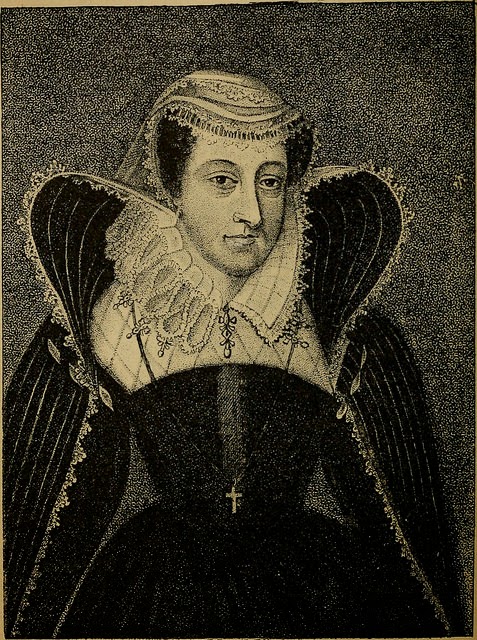
Within half an hour, Richard and Erskine, along with Lauder, Argyll and other officials, are in Mary of Guise's chamber as Lymond is brought in. This is Mary's first encounter with Lymond. She wants to see him because she is curious. Lymond responds with a self-deprecating pun that he is the curiosity that has gotten himself into this predicament. Mary's own dry wit is on display in her brief scene when she tells Lymond they must speak English because her Justiciar cannot follow him if he speaks French and cannot follow her if she speaks English.
Mary, accustomed to swimming in the cesspool of corruption, finds herself in a unique situation--addressing an innocent man who has been wrongly accused:
"We had, I thought, reached the safe haven of corruption where we need never fear to misjudge anybody. I am astounded to find myself wrong.”
The Dowager Queen lists all the many ways in which Lymond helped her and Scotland, ways that only this night have been made known to her, including his role as the mysterious monk at Inchmahome who taught her daughter "scurrilous poetry." Mary is appalled to discover that relying on "a shabby and ransacked armoury, I have thrown away tempered steel." How can she compensate Lymond?
"A polite apology, and Mr. Lauder’s regrets?”
“Modified regrets,” said the Lord Advocate. “I love Mr. Crawford like a son, but I wouldn’t have missed that examination.”
“If you mislay your notes,” said Lymond, “you will find them engraved on my liver."Mary of Guise, grateful though she is for Lymond's services to Scotland and to her, nonetheless questions whether or not he is with her. Francis Crawford, in keeping with his detached, analytical persona, answers honestly that he thinks so. This cannot be the answer the Queen Dowager hopes to hear, but she surely knows it is the honest reply. And an honest man is far more valuable to her than any number of sycophants.
Most important of all the services Lymond has rendered Mary and Scotland is the protection of her daughter, who is sailing to France at this moment, thanks to Lymond's heroic efforts to keep the secret of her departure from the English. For now, the English, who have wooed Scotland with cannon, have lost. What reward other than little Queen Mary's love for Lymond, can her mother offer him?
Lymond says he wants nothing more, but the Dowager Queen knows better, knows there is one thing he desperately wants and needs but will not ask for. Francis looks as a door is opened into what he assumes is a vacant room, and he thinks...
So ends Lymond's first adventure, in the arms of his mother, who welcomes him back into the fold.
Final Comments
The introduction of the occult via the palmistry, the Philosopher's Stone, and the tarocco game are instances of an important theme that runs throughout The Lymond Chronicles. This is interesting because Lymond himself seems to be a quintessentially rational man of the Renaissance, a humanist who would reject such esoteric pursuits as superstitions.
The Game of Kings has no traditional antagonist against whom our protagonist struggles. There are numerous villains (and one really great villainess in Margaret Douglas). One could argue that Lymond is both the protaganist and antagonist, being the conflicted, contradictory, obdurate fellow he is. I think the real antagonist is Lymond's past, against which he fights the entire novel.
Francis Crawford's motives throughout The Lymond Chronicles are a source of endless speculation and fascination for readers. In The Game of Kings he has come back to Scotland to try to prove his innocence and clear his name. That, however, is a goal, not a motive. His motive in restoring his reputation is to remove any doubt or scandal associated with the Crawfords. He is more interested in his family's name and honor than his own personal repute or even his life.
Dunnett has been called a master of the "unreliable narrator," a character whose point of view for whatever reason cannot be trusted as accurate, truthful, or factual. The one person whose perspective is missing from almost all of The Game of Kings is Francis Crawford's. However, when the Queen Dowager opens the door to the room where Sybilla is waiting, we finally have the benefit of Lymond's point of view. He stands looking beyond the open door into what appears to be an empty room, expecting nothing as he has come to expect nothing. Then, with the first whiff of Sybilla's perfume and soft rustle of her gown, memories of his mother come flooding in moments before she appears and opens her arms to gather him in.
In a lifetime of empty rooms, this was another.But waiting within, there is "a whisper of silk, a perfume half remembered, a humane, quizzical, intuitive presence." Sybilla throws open her arms and, we imagine, embraces her wayward, wonderful black sheep.
So ends Lymond's first adventure, in the arms of his mother, who welcomes him back into the fold.
Final Comments
The introduction of the occult via the palmistry, the Philosopher's Stone, and the tarocco game are instances of an important theme that runs throughout The Lymond Chronicles. This is interesting because Lymond himself seems to be a quintessentially rational man of the Renaissance, a humanist who would reject such esoteric pursuits as superstitions.
The Game of Kings has no traditional antagonist against whom our protagonist struggles. There are numerous villains (and one really great villainess in Margaret Douglas). One could argue that Lymond is both the protaganist and antagonist, being the conflicted, contradictory, obdurate fellow he is. I think the real antagonist is Lymond's past, against which he fights the entire novel.
Francis Crawford's motives throughout The Lymond Chronicles are a source of endless speculation and fascination for readers. In The Game of Kings he has come back to Scotland to try to prove his innocence and clear his name. That, however, is a goal, not a motive. His motive in restoring his reputation is to remove any doubt or scandal associated with the Crawfords. He is more interested in his family's name and honor than his own personal repute or even his life.
Dunnett has been called a master of the "unreliable narrator," a character whose point of view for whatever reason cannot be trusted as accurate, truthful, or factual. The one person whose perspective is missing from almost all of The Game of Kings is Francis Crawford's. However, when the Queen Dowager opens the door to the room where Sybilla is waiting, we finally have the benefit of Lymond's point of view. He stands looking beyond the open door into what appears to be an empty room, expecting nothing as he has come to expect nothing. Then, with the first whiff of Sybilla's perfume and soft rustle of her gown, memories of his mother come flooding in moments before she appears and opens her arms to gather him in.
Favorite Line
“That,” said Henry Lauder, closing his spectacles and throwing his pen in the wastepaper basket, “is a brain. If I were ten years younger and a lassie, I’d woo him myself.”Questions
- What do you think of Sybilla's decision to show Andrew Hunter mercy by letting him escape given that he caused her grandchild's death, tried to murder Richard, and framed Lymond at every turn? Is she too generous?
- What dark secret or at least rumor about Eloise do you think Lymond is trying to hide? Do we have any hints?
- Mary of Guise asks Lymond if he is with her, and he replies that he thinks so. Then he says, "There is a divine solution..." What do you think Lymond means by "a divine solution"?
- If he were not driven to clear his family name, do you think Lymond would have bothered to return to Scotland to try to restore his own reputation? He could have easily lived out his life abroad and not have suffered the way he does by returning.
- Why would Dunnett wait until the very end of the book to show us, however briefly, a scene from Lymond's perspective?
- How do you think Lymond feels at the very end when he is exonerated and he sees his mother?
- Do you think Lymond believes what he did was worth the cost, in particular, the deaths of Turkey Mat, Sym, and, most importantly, Christian?
- determined
- sardonic
- resigned
- exhausted
- passionate
- controlled
- insightful
- logical
- eloquent
- witty
- surprised
- relieved
- grateful
- happy?


.jpg)

.jpg)