Link to Introduction

First time reader? Start here

The River Clyde

The River Clyde
The River Clyde Near Midculter in Lanarkshire
Showing posts with label John Maxwell. Show all posts

Sunday, February 1, 2015

Part Three. The Play for Samuel Harvey. Chapter III. Mate for the Master.

Lymond and four women: Molly, Mariotta, Agnes, and Christian. Notice how he treats each of them very differently. 

1. A Bereft Knight Is Checked by His Own Side (about March 8, 1548)*
*Richard has been "seventeen days in the field." The battle with the English took place on February 21 and 1548 was a Leap Year. This may not be the exact date wrong, but it's close.
Sybilla and Christian are still with the sulky, convalescent Queen at Dumbarton when Richard finally arrives there looking to apologize to Mariotta. Sybilla is more anxious and vulnerable than we have seen her before. She knows things that Richard does not and it falls to her to deliver some very unpleasant pieces of news and point out the potential consequences of his further obsessive pursuit of Lymond.

Richard has not thought through the implications of his bringing his brother "to heel." It has not occurred to him, as it has to his mother, that his "unreasonable hatred" of Lymond brought to full blossom in Lymond's destruction will "convict Mariotta publicly of deceit." I am reminded of George Eliot's Middlemarch, when Casaubon stipulates in his will that Dorothea will lose her inheritance if she marries his cousin Ladislaw. What does this do but "publicly convict" the blameless Dorothea of an improper and dishonorable relationship with her husband's cousin? Sybilla is pointing out that this is what would happen to Mariotta as well: it would confirm in the public mind that there is an illicit relationship between her and Lymond where none in fact exists.

Sybilla now exhibits one of her few errors in reading others, an error Christian instantly detects: Sybilla offers to have Mariotta found, removed from Lymond's sphere of influence, and returned to Midculter. What she does not count on is the depth of Richard's anger, the strength of his pride, and the extent of his long-smoldering resentment of Lymond. Lymond, the irrepressible, infallible little brother with "success at the end of each of his pretty fingers" always got and still gets the love of all of Richard's women, including, most importantly, his mother.

Richard even goes so far as to claim that Lymond murdered their sister. Remember, Lymond said to Christian back at Boghall (Pt 1, Ch VII, Part 2), "If I told you that I had murdered my own sister..." First we have Lymond positing that he might have murdered his sister and now we have Richard claiming he did. This terrible scene is mercifully interrupted by two pages announcing the Queen Dowager wants to see Richard right away.


When Christian moves to comfort Sybilla after Richard leaves, the Dowager is described as having "pretty fingers" just like Lymond's. Hands are very important to Dunnett, who had a painter's eye for such details.
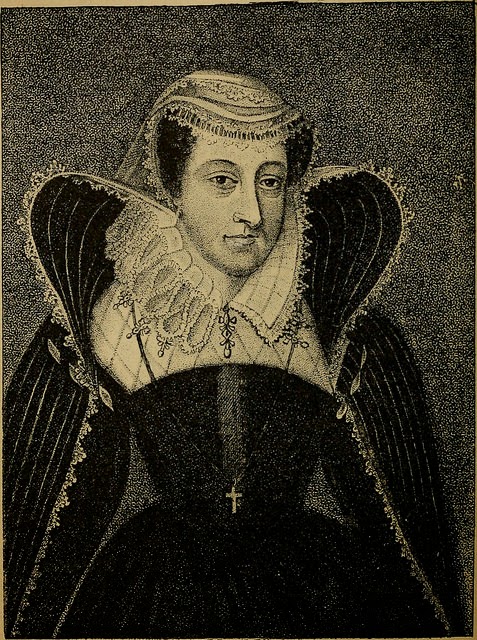

Mary of Guise looking none too
pleased with Richard
Richard is so thoroughly consumed with his own hurt and outrage he flouts the Queen Dowager's command that he go to Edinburgh to buck up that wobbly frog with his wits in his belly (Arran), which is all the pretext Buccleuch needs to suggest Richard be locked up. It is interesting that we do not see this remarkable scene between Mary of Guise and Richard Crawford, but instead hear it told by the always colorful Wat Scott, which greatly enhances the humor in an otherwise very tense and unhappy situation.

The question remains: why did Buccleuch want Richard out of commission at this time? Wat and Richard just recently had a huge, friendship-ending dispute when Crawford and his men showed up at Buccleuch's rendezvous with Will. Wat is not above exacting his revenge, but he also does not want Richard's obsession with Lymond once again to threaten his son and family. He sees this as a nice cooling off period for Lord Culter.

This presents Sybilla the perfect opportunity to ride south, with the Queen Dowager's permission, of course. Where and why she is going we do not yet know.

***
Meanwhile...Gideon Somerville cannot get out from under the thumb of his English overlords. This time Lord Grey wants Gideon to travel with him to London to see the Lord Protector. In the meantime, Grey has ordered the border lords to continue to harry the Scots and keep them from retaking the forts now in English hands.

***
Molly, looking as if she has been
attending decumbitures all her life.
Lymond at last returns to the Tower at Crawfordmuir to discover what "all of Scotland" already knows about Mariotta. He missed the entire drama of her arrival, subsequent miscarriage, the surgeon's visit, and Molly's nursing. Molly again proves her value as one of Lymond's spies. She tells him that Will Scott met with Andrew Hunter at the Ostrich when he came to retrieve her to attend Mariotta. Hunter stayed at the Ostrich a week "for no very good reason" and asked a lot of odd questions. Molly gives Lymond an account of Dandy and Will's conversation but, alas, we are not privy to it. All we know is that Molly believes Hunter is potentially a problem for Lymond and, thus far, Molly has never been a problem for Lymond.

***
Isn't it interesting that Lymond waits a week at the Tower before seeing Mariotta? In part it is because Mariotta is still weak and ill, but the wait only helps embellish his aura of mystery and power in Mariotta's mind. She has created a fantasy like a glowing halo around Lymond, a man she has seen exactly once. When he finally comes to her, his appearance is not as she remembers: this time he is tidy and sober. Mariotta is surprised when Lymond tells her he is sorry to learn she lost the baby, undoubtedly because in her fantasy he wants her for himself and no heir for Richard. Then she surprises Lymond by telling him she left Richard. When she tries to explain why, she finds it very difficult, except for the issue of the jewels.

But Lymond will not be put off: he wants to know exactly what Mariotta and Richard quarreled about. Although we do not hear Mariotta's recital of grievances, we can easily imagine that they are not nearly as terrible once told as they were in her imagination. They are, to use Dunnett's own characterization, an exercise in naivete from beginning to end. Lymond's words and reaction are contrasted to Mariotta's: as he speaks, his eyes are seraphic and "supremely adult." Lymond even tries to show Mariotta that he has given Richard cause to hate him and to hunt him down, such as the fire at Midculter, which she has conveniently forgotten. Add to this the jewels Mariotta told Richard came from Lymond and her own blatant infatuation with his younger brother and you have a big enough stew pot of jealousy and resentment to drive any man into a rage.

Now that he has heard her tale and knows how things lie, Lymond changes his tone and tactics with Mariotta. He assumes the cold, brutal persona of a man interested only in revenge on his brother and taking what is his, by getting rid of the heir and giving Richard grounds for divorcing Mariotta. In short, Lymond paints for Mariotta the exact picture that is in Richard's mind all the while insulting her (her brain is smaller than a chick-pea). Of course, Lymond's icy recitation of his complaints against Richard evokes from Mariotta a remarkable about-face--a wounded defense of her husband--to which Lymond responds as only he could.

He, like Christian earlier in the chapter, refers to Richard's deep interest in the welfare of his pigs: "I thought we would be shikk to shikk, indivisible, like Richard and his piglets." This makes me laugh out loud it's so funny. I can't help thinking Dunnett had "dancing cheek to cheek" in mind when she wrote this sentence. Mariotta, however, finds nothing humorous about this or anything Lymond has to say. All her pretty fantasies are dashed to bits in this one terrible interview. Which is exactly what Lymond wants to achieve.
***

Shikk are demons mentioned in the Arabian Nights that are half a human being, divided "longitudinally" (vertically), so when Lymond describes Richard and his piglets as "shikk to shikk," he conjures up an image of a creature that is half man and half pig.


***
Why Lymond's about-face with Mariotta? He starts off as Good Lymond, with care and concern, talking to her like a normal human being. Once he has heard her tale of grievances, he instantly turns into Bad Lymond: cold, calculating, cruel, vicious. Why? Because he wants Mariotta to stop viewing him as if through a hagioscope, that is, with a squinting, narrow, distorted view. He wants Mariotta to see he is not some dashing hero come to her rescue. She needs to know in no uncertain terms he has zero interest in her except as a means of hurting Richard and that his bad reputation is well deserved.

Before jumping to the conclusion that Lymond means Mariotta ill, it is best to recall he exchanged his truly valuable prisoner--Margaret Douglas--for Mariotta, who has no value to him as a hostage whatsoever, and he initiated the exchange without hesitation.

The soft-hearted Molly, of course, scolds Lymond for his performance for Mariotta. Molly, taking literally Lymond's suggestion that Mariotta would fare better sharing her grievances with Will Scott, sends Will up to sit with Mariotta that night. It's the last anyone at the Tower sees of them both, and Lymond is none too pleased that Will has taken off with his sister-in-law. At least that is how he behaves, but Molly, remember, has never caused him any problems, so one is left to wonder if this isn't another Lymond ploy.

***
Argyll pipers do get around, don't they? Remember it was an Argyll piper who played so memorably at the Ostrich when Lymond plotted with John Maxwell (Pt 2, Ch 1) Now Hunter has a "chance encounter" with him? Not likely in Dunnettdom, I'll wager. We also learn what Molly's girls overheard: Will and Hunter exchanging views on whether and how Lymond might be selling Will out to the English. Will expressed his suspicions and Dandy offered what he knows, that is, Grey wants Will, and Lymond has been seen twice near George Douglas's house.

All this Dandy is helpfully relating to Wat and Janet Scott. Now notice: Janet interjects that Dandy did not know Lymond has (or had) Mariotta. How does Janet know this? Obviously, she has been talking to Dandy before this conversation with her husband, but the circumstances of Janet and Dandy's discussion are a mystery. One thing is clear: Janet's scheming goes on. Buccleuch misses this point altogether and is just glad that Hunter is so kindly offering to help him recover his son.

***
Spring, 1548

The gateway to Holyrood, built
by James IV, 1503
The wedding of John (Jack) Maxwell and Agnes Herries, orchestrated with such care by Lymond finally takes place at Holyrood Palace, and Lymond is there to offer his congratulations and a gift.

Maxwell knows his new wife well: he introduces Lymond not by name, which he must not, but as the man who saved his life at Durisdeer. Ah, ha! Now we know a bit more about that memorable action Lymond undertook at Durisdeer, saving Maxwell from Harry Wharton's sword. What could be a more thrilling wedding gift to Agnes than to meet another real-life knight in shining armor? Maybe a brooch set with angels' heads and worth a fortune? Probably not. She has wed the hero of her dreams and met another even more dashing, mysterious hero bearing costly gifts. Quite a nice start to a marriage for a little girl with a face like melted candle wax full of teeth!

Lymond adds another feminine conquest to his supposedly long list of adoring women (according to Richard).

The brooch. In Pt 1, Ch 4, Dandy Hunter presents his mother with an hugely expensive and garish brooch with diamonds set in angels' heads and carved in onyx. This brooch certainly seems to be the same one: diamonds, angels' heads, and onyx. File this for future reference.

***

I recommend Laura Caine Ramsey's guide to The Game of Kings when reading the exchange between Lymond and Christian, which is packed with allusions ranging from the Old Testament to one of the first English comedies.

***

Christian is also at Holyrood for the wedding and has answered a summons she supposes is from Tom, who is expecting an answer regarding his offer of marriage. But it is Lymond, not Tom, who has arranged this meeting. Her reaction when she hears Lymond's voice tells us that she remains in a state of emotional and spiritual turmoil over him. Their playful verbal combat continues apace, each using a rapier wit and each in turn deflecting the other's rhetorical thrusts.

We learn that Christian knows the names of the three men Lymond has been seeking, presumably from Sybilla but possibly from other sources. She did not offer them up in the gypsy tent when she brought Lymond the news about Crouch's whereabouts, so she may have uncovered the other two names later. She is uncommonly well informed. Notice that she instantly figured out that George Douglas is Lymond's convenient intermediary in securing Samuel Harvey.

Epaminondas clutching the
javelin to his breast
Christian makes an interesting comparison between Lymond and Epaminondas, the Theban general who, according to legend, was wounded by a spear in battle. He clutched the point of the spear to his chest long enough to learn of the Theban victory against the Spartans, knowing that when the spear was removed he would die. Christian suggests that Lymond may be in part responsible for his troubles by clutching his problems to his "evil chest" like a javelin tip, but he succinctly rejects the idea that his affairs would be any better if he did not. I think this is an important insight into Lymond's character: he believes he must clutch his troubles to his evil chest and suffer the consequences. He is not being completely facetious when he tells Christian that he has been "gifted with a surfeit of Satanity," that is, he is inherently evil.

There is an abrupt shift in Lymond's tone when he addresses Christian by her name and warns that his plans may or may not turn out well. And now, here it is: the farewell. Lymond tells Christian in a way she will understand without having it spelled out for her that there is no future for them as anything but acquaintances, and that, only if all his plans go well:
"Whatever you touch will return warmth to you and whoever you share it with will be twelve feet tall like St. Christopher."
In short, Lymond is telling Christian she will not be sharing her warmth and her life with him.

Even though he hopes Christian will not regard him as insensitive, Lymond thinks it is important to state the obvious: if Christian had not been blind, she would never have had this adventure with him. Her reaction is very interesting: this experience, quite apart from making her more tolerant of her blindness has turned the years of quiet, desperate acceptance into a rage against the darkness. It has made her acutely aware of what she has missed. Of all men, only Lymond has shared the thrill of adventure with her, and then only because she could never see his face.

And now he is gone.

***
Sybilla is back, but from where? Richard has been released for the wedding festivities. Sybilla admits to Christian that she is frightened. Then she adds, "My sons sometimes seem so much stronger than I am." This is an interesting juxtaposition of thoughts. I think Sybilla is frightened by her sons' strength in part because it means she cannot influence them as she has hoped and in part because of the inherent danger in two strong men violently opposing each other. Neither will yield.

Is it also possible that Sybilla is sending Christian a subtle message about Lymond with that comment? Lymond is strong enough to walk away from "a woman ... with a familiar spirit," someone rare enough to be his match and possibly a mate for the master? I am not sure, but what we do know is that immediately after this scene, Christian accepts Tom's proposal. I think this meeting with Sybilla somehow finalizes Christian's decision to accept Tom.

Of course, Tom, as second son, is the Master of Erskine, just as John Maxwell is the Master of Maxwell. Lots of mates for Masters in this chapter.

***
Dunnett's description of Richard is another perfect example of why she is simply the best.
The third Baron Culter had the sort of pride that makes a man walk straight back to the place where he has been publicly undressed and dare the universe to look down on him.
We learn so much about Baron Culter's character from two sentences: his pride is strong enough to carry him right back into the lion's den looking all the while like an emperor instead of a victim. Just like Lymond. Dandy Hunter takes advantage of the situation by approaching the scandalized Richard and offering to broker a rapprochement between him and Buccleuch.

The deal is too tempting for Richard to refuse. Will knows Lymond is going to betray him and has sent Dandy a message saying he knows how it is to be done.

Once Richard and Wat Scott patch things up (sort of), they examine Will's message:
  • Lymond plans to ride east to an unspecified location.
  • At this location Lymond will secure Samuel Harvey from George Douglas and Lord Grey.
  • Once Lymond gets Harvey, he will send a message to Will to join him.*
  • When Will arrives, Grey will take him.
  • Will proposes in his letter that when he gets the message from Lymond he will notify his father.
  • Buccleuch, Culter, and their men will descend on the rendezvous spot and take Grey, Douglas, and Lymond.
  • Meanwhile, Will Scott will find his own way home.
*It is not at all clear how Lymond will get a message to Will unless he takes one of his own men or perhaps Johnnie Bullo with him. However, he cannot risk letting one of his men know he is betraying Will, and Will would never respond to a message delivered by a stranger. 
The discussion now turns to the hostages that Wharton killed after Maxwell turned on the English and joined the Scots at Durisdeer. This is one of the consequences Jack Maxwell was weighing (Pt. 2, Ch. III) when deciding whether to fight on the Scottish side. This was a particularly difficult discussion between Maxwell and Lymond. It was Lymond who laid out the choice brutally and succinctly: "Save the Carlisle chickens, and you let the Stirling stables burn." At Lymond's urging, Maxwell chose to fight with the Scots and thereby win Agnes Herries (and her title and property). The price was the lives of half his hostages. An ugly choice, but it is important to recognize that Lymond wanted Maxwell to make this choice and in so doing, he condemned a number of innocent men to death. Lymond can be ruthless.

Buccleuch has the right of it: "We're seeing times ... that crack the very marrowbone of tragedy."

In the final act of the chapter, Sybilla, playing the Foolish Mother, tries one more time to get Richard to see reason regarding Lymond and Mariotta. Now we know where she went when she left the castle. She went to the convent at Culter to see Mariotta. Richard, unconsciously aping Lymond's posture when Sybilla last saw him at Midculter, does not want Mariotta back, but it does not seem he has considered the possibility that neither does his wife want him any longer.

Poor Sybilla. One son a hunted and hated outlaw wanted for a capital crime. Another son bent on capturing and/or killing his brother. A marriage between son and daughter-in-law in collapse. The loss of her first grandchild. All the calm order of her life destroyed, with only more pain and suffering on the horizon.

Questions
  1. Why does Sybilla ask Christian to join her when she confronts Richard knowing he will detest airing family secrets in front of an outsider?
  2. Where did Lymond get the brooch he gives to Agnes as a wedding gift?
  3. Lymond encounters Molly, Mariotta, Christian, and Agnes in this chapter. Which important woman who appears in the chapter do we not see him with?
  4. Why does Lymond decide not to pursue a romantic relationship with Christian?
  5. By urging Maxwell to side with the Scots, Lymond directly contributes to the death of the hostages at Carlisle. Is Lymond simply heartless, as Maxwell suggests in an earlier chapter, or does he have other motives?
Favorite Line (one of the classic Lymond quotes)
"All I ask in this world," said Lymond a shade grimly, "is half an hour when I don't know what I'm doing; but no one has granted me the privilege yet."
Words that Describe Lymond in Mate for the Master
  • Cold
  • Cruel
  • Calculating
  • Unkind
  • Concerned
  • Solicitous
  • Sardonic
  • Sober
  • Inquisitive
  • Ruthless
  • Charming
  • Ingratiating
  • Self-deprecating
  • Playful
  • Serious
  • Sincere
  • Honest

Sunday, December 14, 2014

Part Two. The Play for Gideon Somerville. Chapter III. French Defense

A French Defense in chess is an opening move with "a reputation for solidity and resilience, though it can result in a somewhat cramped game for Black in the early stages."

Who, in this game of kings, is Black and who is White?

1. Touching and Moving (December 1547)

"Several moves" occur in apparently random sequence in the two weeks following the cattle raid, implying the sequence might not be random and the events might not be unrelated:
  • Christian eludes Tom Erskine and goes to Bogle House in Stirling for Christmas.
  • The Buccleuch household, including a very pregnant Janet, also make for Stirling.
  • The Culters, sans Richard, go to Ballaggan to visit Lady Hunter.
The last event we see first as we are again treated to an interview with "naughty" old lady Hunter. She may be a cranky invalid absorbed in diagnosing and treating her own maladies, but she is perceptive, immediately detecting Mariotta's "condition." Mariotta takes Sybilla's advice to heart at first and keeps her mouth shut. When Sybilla responds to Lady Hunter's crude comment about the baby putting two people between Lymond and the family fortune--"I can't say I ever considered the matter in a racial light"--she is using the word "racial" in the 16th century meaning of the word as relating to family lineage. In other words, Sybilla is telling naughty old Lady Hunter that she has not given a thought to the implications the baby will have for who inherits what in the Crawford family. This is almost certainly untrue, but Sybilla would never air the family linen.

Sybilla gives as good as she gets, immediately changing the subject to Andrew Hunter's lack of a wife and to Catherine Hunter's stinky dog. It is Lady Hunter's attack on her son that drives Sybilla's words of warning right out of Mariotta's head and she speaks up in defense of Dandy. Her comments elicit a nasty retort from Lady Hunter about Richard's good fortune, and Sybilla is quick to reply with her own biting quip that it's a good thing she and Agnes Herries are also rich and beautiful or they would be highly insulted by these remarks. Of course, Agnes is only rich, not beautiful, so Sybilla's riposte is a defense of the girl, who, you might have noticed, is silent for the first time. She is bored, no doubt, but also more than a little intimidated. And, perhaps, she has learned the virtue and value of silent observation from Sybilla and Christian.

Lady Hunter's "Recipe" Book
Sybilla deftly steers the conversation to an area of Lady Hunter's liking: herself and her ailments and her cures. Sybilla is working very hard to keep Lady Hunter talking until Andrew comes home, but so far we do not know why. I love the fact that old lady Hunter gets Mariotta entangled in a discussion of the state of Midculter's linen while Sybilla is locating the "recipe" book: it is a nice allusion to "airing dirty laundry," something no one at Midculter is inclined to do. 

By the time Dandy Hunter arrives, it is too late for the Crawford party to return to Midculter and, after dinner, Mariotta finds a way to speak to him alone. From their conversation we learn that Dandy knew about the baby before Richard. So Mariotta continues to confide in a man not her husband, not only about the presents, which continue to arrive, but also about something as intimate as her pregnancy. There is no way to gloss over this: Mariotta's behavior is simply unacceptable and, if discovered, sure to drive a bigger wedge between her and Richard. Badly done, Mariotta. Badly done.

Andrew Hunter is no fool. He warns Mariotta that Richard will be furious if he finds out she has confided in someone outside the family, especially an attractive, unmarried young man. Then Mariotta betrays something else about herself when she starts talking about Lymond. She remarks on his appearance as she plays with the pearl necklace she believes is a gift from Lymond (just as she giggled when she earlier thought of him). She is still under Lymond's spell, and Dandy knows it.

Mariotta is setting herself up for a bad fall: she is infatuated with Richard's younger brother and sharing confidences with another handsome young man to whom she is attracted. At least she has the sense to see that, if she does tell Richard about the gifts, he might come out on the short end of whatever confrontation occurs as a result of this revelation. She does not seem to have a very high opinion of Richard's ability to defend himself.

Possibly the most important disclosure in this section comes from Dandy Hunter when he lays out the treasonous act and other crimes of which Lymond is accused: 
  • as a spy for the English he betrayed the Scots before the battle of Solway Moss (November 1542), allegedly contributing to the catastrophic Scottish loss
  • the English whisked him away to London and Calais (on the coast of France but under English control) when his perfidy was discovered
  • the French caught him, but Lord Lennox arranged to have him freed
  • he worked for Lennox and Wharton (on the English side and against the Scots) until they discovered he was cheating them
  • he escaped and became a mercenary (on the continent) until his recent return to Scotland
Wow...Lymond has been very busy these past five years!

We still do not know why Sybilla wanted to stay at Ballaggan until Dandy arrived.

2. A Queen's Knight Fails Signally to Adjust (December 23-25, 1547)

Christian, alone at Bogle House with a letter, sitting among her thoughts "like a tiger among peahens" (great!), must have been going slowly mad waiting for someone to return and open that letter, which she thinks and hopes has further intelligence from her mystery man. Of course it does, wrapped around Maxwell's letter to Agnes in such a way as to arouse no suspicion and yet be transparent to Christian. Christian deduces from the occult message and the fact that Johnnie Bullo is now avoiding her that her part in Lymond's plans is done. He seems well on his way to finding the man he seeks.

Agnes reads the letter aloud when both Christian and Sybilla are in the room (Sybilla inquires about the identity of "Jack"). Recall that the fortune told to Agnes by Johnnie Bullo at the fair following the papingo shoot was that she would meet a thin man named Jack with a romantic smile (Pt 2, Ch I, Sec 1). It is now clear this was all part of Lymond's plan: he had Johnnie plant the idea of "Jack" (John) Maxwell in the mind of Agnes, a thirteen-year-old romantic; he wrote the love letters with hidden messages; he arranged Maxwell's triumph with the cattle raid against Lennox to gain Marie of Guise's favor; and now he is sending Maxwell to meet Agnes to seal the deal.

***
On Christmas Eve of all days, Richard takes the glove from the papingo shoot, leaves Bogle House very early without telling anyone, and goes to try to trace Lymond using the glove. Merry Christmas, Mariotta. Richard does seem a bit obtuse about his wife.

***
In fairness to Richard, his original intent was to pick up his mother's miniature from Patey Liddell, ask about the gold on the glove, and get home before Mariotta misses him. But once he learns who bought the gold from Patey, Richard does not give a second thought to riding to Perth, a nasty ride of thirty-three miles in the snow, all the while knowing Mariotta rightly expects him to attend her at her very first Christmas at Court. This is truly a foolish errand: no one knows where Richard is and he has left no word about when to expect him. Nothing short of obsession would drive a man to ride over thirty miles of rough ground in the snow on Christmas Eve to talk to a glover and maybe learn who ordered the glove. Badly done, Richard. Badly done.

All that being said, I love this section because Richard gets fully fleshed out for the first time. We learn a great deal about him. He is a very determined man who knows how to handle people and get his way while gaining their respect, trust, and friendship. He is not above making a deal with the old scoundrel Malcolm Waugh and even finds humor in the whole situation (there is "unwilling amusement in the grey eyes" and he laughs aloud despite all the discomfort and trouble of the day). It is obvious that Richard is enjoying himself when he finally tracks down Jamie Waugh and throws him into the river to sober him up.

The true measure of Richard, however, is apparent in his reaction to Lymond's little joke. His brother has made a fool of him, but he keeps his composure on display and his "bitter self-mockery" well hidden. Nonetheless, he is "only human" and, beneath his calm veneer there is deep anger at Lymond's trickery, irritation at his own credulity, and disappointment in not finding any useful intelligence through tracing the glove.

Richard is in no frame of mind to return to Stirling for the Christmas Eve court festivities. Unfortunately for him, his plan of sleeping off the ale and returning to Stirling early on Christmas morning runs afoul of an English raid. Richard Crawford spends most of Christmas Day fighting the English, so his quick morning jaunt to Patey Liddell's shop turns into a long two days of discomfort, humiliation, and combat. Merry Christmas, Richard!
Aside: The verse favored by Jamie Waugh is an anachronism. It is from Hardyknute, thought to be a very old ballad when in fact it was discovered to have been written and published in the early 18th century.   
***
In its own way, Sybilla's Christmas Day is as uncomfortable as Richard's. She finds out from Patey that Richard has gone to Perth in search of the glover. As discomfited as she is about this fact, Sybilla still has the presence of mind to notice the pale yellow gold Patey is using and the likelihood it was mined on Crawford land, meaning it is subject to a tax and legally intended only for the Mint. In short, this is illegally obtained gold. Sybilla is putting Patey on notice about the gold and Patey lets Sybilla know that he will continue to be a friend and help to the Crawfords, so their battle of wits is a draw. Sybilla leaves Patey with the warning not to let anyone else know he is the one who gave Richard the information about where to find the glover or there will be hell to pay.

***
We observe the wildly Gallic Christmas Day festivities, so beautifully described by Dunnett, from Sybilla's point of view as she watches her "flock," in particular Agnes Herries, who has been improving under the careful tutelage of Sybilla and Christian and from the beneficial effects of Maxwell's love letters. "Jack" Maxwell finally makes his appearance before the dazzled gaze of Agnes as Sybilla watches with grandmotherly concern and excitement.

Tom Erskine finally catches up with Christian. What does he want to talk to her about?

***
Agnes Disappears up the
Turnpike Stair Followed by "Jack"
This is the first time Agnes has ever seen Maxwell, and the impression he makes is perfect. Too perfect. This has to be a scene planned by Lymond, from the comment about Abbey Craig speaking to Dumyat (a reference to the difference in their heights), and Maxwell gracefully lifting little Agnes off her feet, to the rose in the snow from his home at Threave Castle. Maxwell even refers to himself as "Jack" to complete the seduction. Agnes's heart is completely his. And there is the exquisite irony of her comment to Maxwell--"I think you are as handsome as your letters"--because we know who wrote them (someone who is more handsome than his letters).

***
Richard and Three Women

The "bloodhound" finally makes it back to Stirling, dirty and tired and disgusted mainly with himself and his fool's errand. This is how Mariotta finds him and the exchange does not go well. Richard makes his first mistake by not telling his wife about the trip to find the glover, instead using the battle with the English as his excuse for being absent. When pressed, Richard tells the truth about the wild-goose chase. Mariotta reasonably suggests he might have told her where he was going and perhaps even talked it over first. Richard's second mistake, and it's a doozy, is his response to this suggestion: "Oh?...Who with?" Oh, Richard, really? He fully deserves Mariotta's uncharacteristically biting response. Both of them have a lot of learning to do if this marriage is going to survive.

Richard's next interview is with the Queen Dowager, who listens to his account of the battle, asks some pointed questions, and chastises him for leaving Mariotta unattended at the Christmas Court. His absence has been noted.

Then he is waylaid by yet another woman, this time Janet Beaton, who again has surreptitiously garnered news for Richard. Richard, ever the upright fellow, stops her from sharing the contents of Wat's letter because he knows it is a betrayal. However, the "serene" Lady Buccleuch thinks she knows what is best for her husband, so Richard learns of the planned rendevouz in February.

Why does Janet tell Richard about Wat's upcoming meeting with Will? Janet wants to protect all things Buccleuch, and she will do pretty much anything to further that end. She knows Richard wants Lymond, preferably dead, which suits her just fine because, as she pointed out earlier, that is the best thing for Will's future. With Lymond out of the way, Will no longer has a mentor to follow and it will be easier to spin a tale of how Buccleuch's heir was a trusting innocent mislead by an outlaw and scoundrel.

Finally, Janet proves her mettle yet again when she tells Richard she will let Buccleuch know that she was the source of Richard's information. It will do Wat Scott good to have an old-fashioned row with the missus rather than "mincing away" with his son's contradictory and convoluted moralizing.

3. Another Royal Lady Enters the Game

Warkworth Castle
The Lord Protector, facing trouble in England, needs a success in Scotland and has a plan for such: 1. destroy the uncooperative House of Buccleuch; 2. destroy the wavering House of Douglas; 3. burn Scotland "up to the eyebrows"; and 4. capture the little queen and raise her in England as the future bride of King Edward VI.

Lord Grey of Wilton (late of the Humiliation at Hume), is still running the show on the border and has gathered the Lords Wardens to lay out the plan. Into this stew comes Gideon Somerville, who finds himself in a decidedly unsavory spot because of Grey's command that he give George Douglas's letter to the mysterious outlaw Gideon now knows to be Crawford of Lymond. Gideon relates the details of his encounter with Lymond and includes every detail except the single most important one: Lymond's identity. Gideon wants to extricate himself from this intrigue as quickly as possible.

Grey has many competing problems, not the least of which is Lord Lennox's ego. Lennox, married to Henry VIII's niece Margaret, has to be given a prominent command but, as Wharton so aptly if crudely puts it, Lennox is "an interfering fool." The trick will be to give Lennox a command that looks and sounds impressive but in which he can do no damage.

***
Almost on cue enters none other than Lennox's wife, Margaret Douglas, the Countess of Lennox. Who is she?
  • Her father is Archibald Douglas, 6th Earl of Angus (Scottish).
  • Her uncle was Henry VIII of England.
  • Her mother was Margaret Tudor, Henry VIII's elder sister, who was also widow of James IV of Scotland.
  • Her husband is Matthew Stewart, 4th Earl of Lennox. Lennox spent most of his early life in France and returned to Scotland with the promise of marriage to the Queen Dowager (Mary of Guise), which did not happen. He deserted the Scottish cause and threw his lot in with the English, after which Henry VIII gave him his niece Margaret Douglas's hand in marriage. 
  • George Douglas, brother of Archibald, is another uncle.
  • She is 32 years old.
Margaret is the "Pearl of Pearls" Lymond alludes to in Pt 1, Ch I, someone he knows well and, it seems, recalls without fondness. She is a force to be reckoned with as we soon see: "Lennox might be a bad tactician, but his wife was not."

The situation into which she walks is this: Grey is friends with her uncle George Douglas and has made private pledges of immunity to him, but those promises are endangered by the fact the Douglases have been playing both sides, English and Scottish, in this dangerous game. Wharton is fed up with the Douglases and wants them punished now. The weather is mitigating against all three English armies invading at once, so the plan is for Grey's men to attack Buccleuch while Wharton goes after the Douglases. The plan to march to Haddington south of Edinburgh must be deferred until the weather improves.

Margaret, however, offers them a new plan, bold, practical, and formidable. What that plan is we are not as yet privy to, but it must be a good one if these bold, practical, and formidable men are willing to go along with it.

***
John Maxwell reports to Lymond of his initial success with Agnes Herries. It is interesting that Lymond is the one who told Maxwell that Agnes will make an excellent wife. How does Lymond know this? From his mother and Christian, of course, who have been delicately grooming Agnes, who has wit and native intelligence enough to overcome the awkwardness of her tender years.

But now Lymond has a much more difficult and painful bargain for Maxwell: attack Wharton and win the favor of the Queen Dowager, but at the price of his hostages in the hands of the English. Maxwell does not like this plan at all, but he does not say he is against it. As Lymond points out, the safety and perhaps the survival of Scotland hangs on what Maxwell does or does not do to stop Wharton. Lymond also tells John that he has other means of passing messages and no longer needs his love letters to Agnes. What are those means? As of yet, we do not know.

And now for the passing bit of news that brings the figurative roof down around Francis Crawford: "a niece by marriage." This is all Lymond needs to hear to set his antennae trembling. Will Scott sees the momentary change of expression in the usually inscrutable face: it is there, and then it is gone like the brush of a butterfly wing against a cheek. But it tells Will that something very dire and very dear has reached the Master's ears. Margaret's plan is to try to gather the Douglases and unite them into a force for the English against Scotland.

Margaret is heading to Drumlanrig. Drumlanrig is where Richard Crawford and Agnes Herries ended up after their tumble into the Nith and where Richard overheard the discussion between George Douglas and Andrew Hunter about the prisoner exchange involving Jonathan Crouch.

Drumlanrig is the home of James Douglas, who is John Maxwell's uncle and George Douglas's brother-in-law. Remember: Margaret's father is Archibald Douglas (the Earl of Angus), who is also John Maxwell's brother-in-law because he is married to Maxwell's sister, making Margaret Douglas John Maxwell's "niece by marriage." Confused yet? The point to remember is that Margaret is a Douglas by birth and John Maxwell is closely connected to the Douglases by marriage. This is why Lymond's "courting" of Maxwell is both so important and so dangerous. John Maxwell is involved in a very risky gamble.

Before he leaves, Maxwell lets Lymond know with a subtlety worthy of Francis Crawford that he appreciates his facility with Latin in the letters but his use of French is almost over the top and over the line...but not quite. Maxwell rewards Lymond with a rare smile and Lymond rewards Will Scott with "his old age," i.e., a hostage to replace him:
My brilliant devil, my imitation queen; my past, my future, my hope of heaven and my knowledge of hell...Margaret, Countess of Lennox.
Questions
  1. Why is Christian Stewart avoiding Tom Erskine? 
  2. Why does Sybilla want to remain at Ballaggan until Andrew Hunter comes home?
  3. Is Christian disappointed or relieved (or both) that her role in Lymond's cause now appears to be over?
  4. Why would Mariotta and perhaps Sybilla be surprised to hear that Richard can hold his liquor like a fisherman?
  5. What does Margaret Douglas want?
  6. Would Lymond have used Will as his hostage had Margaret Douglas not become "available"?
Favorite Line
But this time, something new filled the blue eyes; and Scott, sitting forgotten, saw it, and his breathing stopped.
Words that Describe Lymond in French Defense
  • ruthless
  • driven
  • conniving
  • callous
  • surprised
  • exhilarated

Friday, December 5, 2014

Part Two. The Play for Gideon Somerville. Chapter II. Discovered Check 1. Diagonal Mating Begins

1. Diagonal Mating Begins

Richard is being a pain again, this time to Mariotta. He isn't injured enough to warrant her care or slow him down (or keep him at home and in her bed). Rather than confide in her mother-in-law, Mariotta turns to the only other readily available woman for advice. Unfortunately for Mariotta, Janet Beaton is about as subtle as an andiron. She thinks Mariotta ought to be grateful that Richard is off doing manly stuff and leaving her alone. This is not the advice Mariotta hopes for.

The Jewelry

To add to Mariotta's woes, two anonymous packets containing expensive jewelry arrive for her. The "arrogance" and "insolence" both of the gifts and the messages convince Mariotta they must be from Lymond (who else?). She fails to show the brooch to Richard and Sybilla, so by the time the bracelet arrives, she is in a corner: the first thing Richard is likely to say to two gifts is, "why didn't you tell me about the first one when it arrived?" Richard is a man of unquestioned probity, and he expects the same from everyone else, especially his wife. Her failure to inform him immediately of an unasked for gift, accompanied as it was by a suggestive note, is beyond unacceptable. It would be for Richard a form of betrayal.


Mariotta's rationale for withholding these facts--she fears it would make matters between Richard and Francis worse--would fall on deaf ears with Richard. Mariotta's failure to inform Richard is not entirely because she is worried about her husband. She continues to be plagued by her memories of Lymond who, you will recall, moved her in a way her husband never had. Mariotta does not handle the situation well. Instead of the direct, honest approach, she wears the jewelry to see if Richard notices. He does not.

It is Janet who seems to draw the connection between the jewelry and Lymond: seeing Mariotta's jewels, Janet instantly recalls the shooting glove dropped at the Papingo shoot, which has "some jewellers' work on the back." Richard failed to follow up on the glove, which Sybilla says remains in a cabinet in Stirling.

The Philosopher's Stone, Part 1

Sybilla has invited Johnnie Bullo to visit her, Mariotta, and Janet at Midculter to discuss the Philosopher's Stone. On the surface, it appears the reason for inviting Johnnie to her home, other than satisfying Sybilla's intense curiosity, is to give her an opportunity to use him as a messenger between her and Lymond.


The Alchemist
Johnnie was not anticipating Janet Beaton's presence and is "not altogether pleased to see her" because she dabbles in magic and medicine, which are his domain. She might be a problem for him because she will undoubtedly question his knowledge and credibility, but he accepts the challenge "without diffidence." That is such a fine way of showing Johnnie's character: can you imagine Johnnie Bullo ever being meek or uncertain?

Johnnie's disquisition works his magic on Janet, who now is eager to engage in creating the stone. Janet, ever practical, focuses on making sure a commercial agreement is worked out on how to handle their profits from the gold while Mariotta is now completely caught up in the mystical aspects of the project. And Sybilla thinks through and plans for all the necessary items required for the project. Johnnie is eager to comply.

The Letter

This section is a challenge to understand because the letter operates on so very many levels.

I admit to puzzling over the opening for quite a while. What is the significance of beginning with the strange phrase "the great Pan is dead"? Lymond expects Christian, a highly educated woman, to know the reference to Plutarch, in which a boatman is exhorted by an anonymous, unseen voice to make the proclamation "the great Pan is dead." Lymond seems to be telling Christian (and Sybilla) that he is the anonymous voice speaking through John Maxwell.


The Great God Pan
Also, Pan is the god of shepherds and flocks: that, I think, is another clue to why this quote is included in the letter. Pan liked to frighten men and animals so he could inspire, yes, "PANic." That reminds us, the readers, of Lymond's use of the horses to create panic in the supply train headed for Hume and, perhaps, imply to Christian and Sybilla an incident in which animals will be used to create havoc. Perhaps they will reflect on this reference when they learn about the cattle raid.

My husband suggested a very plausible reason to start the love letter with this phrase. Pan, the satyr, suggests sexual desire; the double meaning here is that Maxwell cries in woe that his desire for Agnes is thwarted by her betrothal to another while Lymond subtly tells Christian that his desire for her must also "die."

Or perhaps the quotation is just one of the "sly absurdities" that Christian takes note of.

"Mercury's finger," on the other hand, is an excellent and more delineated clue. In palmistry, "the small finger is known as the mercury finger. This is the key to individual’s balance or abuse of power. If the finger is long, the individual is witty, and will have success in business. ... It is a good sign if this finger is straight and long. When pointed, it shows eloquence, tact and diplomacy." Mercury Finger: Palmistry Illustrated Guide

We know Lymond's fingers are long and slender, and I think we can safely assume that his Mercury finger is pointed. I am confident this is a message for Sybilla, who reacts to this one thing in the whole letter. She has already shown her interest in things mystical, and it is not unlikely that she and Francis would have read and discussed the arcane "sciences." Also, the Mercury finger and Mercury in general are associated with communication, and this is something Sybilla and Christian (and Janet) would have known. Lymond is communicating to his mother and Christian through Maxwell's letter. 

Remember: Lymond told Christian he would write to her, and he has, through Maxwell. Christian knows that while the letter itself is for Agnes, the subtext of the letter is directed to her. She receives Lymond's messages, and the flowery language and "sly absurdities" are part of his means of letting her know he is the voice behind the written words. His primary goal seems to be to tell Christian he is making good progress toward achieving his goal of tracking down the man he has been seeking with her help. 

Interestingly, Christian does not ruminate on the "love letter" aspects of Lymond's message, although they surely were clear to her. The "Spanish"* quotation at the end of the letter, included by Lymond to ensure Christian is asked to read the letter, is an unmistakable message to her since she recently heard him sing the song. Here's the full verse in English:
Rose of all roses, and Flower of all flowers,
Lady of all ladies, and Liege of all Lords.
Rose of beauty and truth,
and Flower of joy and of youth;
Lady enthroned in great holiness,
Liege Lord, who bears our sorrows and sins.
This is the Lady I hold as Liege
and of whom I long to be the troubadour,
so that, in this, I may have Her love,
giving myself over all other loves.
*The language is Galician-Portuguese, not Spanish, but none of the ladies (except Christian) seems to know the difference, and she is not telling.

Sybilla makes sure that Agnes answers the letter--with Christian's help--right away; there is no doubt that she sees Francis's fine mind behind the overwrought, almost silly letter. I'm amused that Sybilla says, with her fine sense of irony, "you can never tell a man from his letters." Is that ever true in this case!

***
The Plan

Wat Scott arrives after the ladies have dined. Notice Richard did not eat with them, showing up after they were finished. He really is making himself scarce. Sybilla is unhappy that Wat himself came to get Janet, as evinced by the excellent control of her facial muscles, because she has been trying to keep Richard and Wat apart for Lymond's sake. 

The women now learn from Richard and Wat's conversation about the plan for a cattle raid, supposedly hatched by Maxwell. Richard wants to know if Wat will participate in the raid and he is loathe to answer, so his wife does for him, as if pulling divine intervention from above: "Will you listen to this?" demanded Dame Janet of the ceiling. "The man's lost his tongue..."

The River Tyne (with cattle)
Wat has received the Queen Dowager's permission to pay lip service to the English as long as he shows proof of his Scottish loyalties. Participating in the cattle raid is one such proof, but Wat runs the risk of being spotted by the English, who will then know he's playing them for fools.

John Maxwell gets credit for the cattle raid, an idea planted by Lymond, nurtured by Maxwell, and harvested by the Scottish lairds, which somehow involves Wharton's next border incursion. Remember: George Douglas came up with the idea for Lennox to lead the English raid in the dead of winter and apparently it is going to happen after all. Lymond knew about this planned raid and, at the Ostrich Inn, suggested to Maxwell he attack Lennox and thereby get credit with the Scottish court for stopping another English incursion.

We get a glimpse of just how keen Buccleuch is in his analysis of John Maxwell's precarious situation. Both he and Richard know it is risky to trust Maxwell, given the fact that the Protector (of England) "has him by the short hairs," but they agree they should chance it. Maxwell's love letter to Agnes helps seal the deal because it is evidence that Maxwell really is trying to get into the good graces of the Queen Dowager. It appears from all the evidence that John Maxwell has cast his lot with the Scots and not the English.

The final scene in this part is a hasty private conversation between Janet and Richard in which she lets him know Wat has not changed his mind about hunting Lymond and his men. The most interesting part of the exchange is the one Richard does not hear. Janet knows there is trouble--deep trouble--between Richard and Mariotta, but she is also wise and experienced enough to know from Richard's demeanor not to bring it up now while he is chewing on his obsession with his brother.

Questions
  1. Why is Sybilla so keen on having Johnnie Bullo create the Philosopher's Stone?
  2. What does Johnnie Bullo hope to achieve from trying to create the Philosopher's Stone when he knows he cannot turn base metal to gold?
  3. Why is Richard so cold to Mariotta?
  4. When Sybilla suggests Christian help Agnes write her response to Maxwell, do you think Lymond's mother knows he is secretly communicating to Christian as well as her?
Favorite Line
The small panes of the Dowager's window became grey, and then ultramarine, and the hot, scented air fondled and set about itself strange words.
The hot air fondled the strange words...what an amazing image!

Words that Describe Lymond in Discovered Check 1. Diagonal Mating Begins (he does not appear in this section)
  • Clever
  • Conniving
  • Manipulative
  • Duplicitous
  • Unscrupulous
  • Subtle
  • Sly

Wednesday, November 26, 2014

Part Two. The Play for Gideon Somerville. Chapter I. Smothered Mate

1. Removal of a Blocking Knight

Branxholm
Winter is coming and with it, more trouble.

Richard Crawford is at Branxholm, the Buccleuch home, trying without much success to enlist if not Wat Scott then his men and hounds in pursuit of Lymond's gang. Branxholm is about as different from Midculter as possible: a cacophonous mix of screaming babies, boisterous children of all ages, argumentative adults, and assorted animals all contained within utilitarian if not pleasing walls. Buccleuch has every reason to be worried about his home and family given the cross-border raids by the English (Seymour and Wharton) that have left other estates in ruin.

Buccleuch is still pretending to be ill to avoid having to accede to Grey of Wilton (he of the mouth injury and victim of Lymond's Spanish supply train commander) and his demands for a show of loyalty. Add to these Wat's concerns over Will's fate, which Richard plays to by offering the logical argument that it would be better for a family friend and a Scotsman to catch Will than for him to fall into English hands.

Notice that Wat is perfectly happy to throw himself into a full-throated argument with Janet as a way of avoiding further discussion with Richard, although Dunnett certainly implies that the Buccleuch household is normally just this "corybantic" (wild) and noisy and unrestrained. How very different from the Crawfords, who are paradigms of self-mastery and reserve. Except, of course, for Francis, who can be quite wild on cue.

Into this madhouse comes Sybilla, purportedly looking for relief from Agnes Herries. Really? If Sybilla wants a quiet retreat from Agnes's overpowering voice, she certainly has come to the wrong house. So what is her true motive? She is once again intervening to block Richard from using Wat or his resources to find Lymond. Sybilla also lets slip the fortune Lymond created for Johnnie Bullo to tell Agnes: she will fall for a thin man with a romantic smile named Jack. This could be important because Lymond undoubtedly had something in mind when he came up with this prophecy.

Sybilla also reintroduces the plan for the discussion of the Philosopher's Stone, which leads her on a desultory journey to other topics, by which time Richard's request for Buccleuch's help is long forgotten. Once again, Sybilla has subtly but effectively disrupted her elder son's plans vis a vis her younger son. Everyone is glad when Richard leaves because Wat Scott does not want to get involved in helping him find Lymond's gang.

As Richard is leaving, Janet lets him know she agrees with him that the Scots need to catch Lymond and Will before the English do and even suggests he go behind Buccleuch's back to do so. But Richard hates conspiracies and deceptions of all kinds and will not consider it. He instead implores Janet to talk Wat round to his (and her) point of view.

Notice Richard's interesting comment about Lymond:
"I tell you, Lymond has taken three months to kill all the years of my childhood."
On the surface, this probably means something like, "his behavior has aged me ten years in three months," but I wonder if he isn't saying that Francis has destroyed all the love and affection and loyalty of their childhood together in the three months he has been back in Scotland and acting the brigand. Richard is, after all, offering to hunt Lymond down and possibly kill him on sight.

One last question: who is the blocking knight who is removed in this section? The obvious answer might be Buccleuch, but on reflection that does not make sense. After all, he has already blocked Richard's plans to hunt down Lymond and company, so he was already removed. I believe the blocking knight is Richard himself. Remember in Opening Gambit that it is Richard who steadfastly refuses to engage in finding Lymond, despite Tom Erskine and Wat Scott's entreaties. Richard was, at that time, Lymond's "blocking knight," that is, the "piece" protecting the "king." Now Richard confesses to Janet that he no longer has any family feeling or other emotional ties that will stop him from finding his brother and, if necessary, killing him. Lymond, the "king," is exposed. But through the inaction of Buccleuch and the interference of Sybilla, Richard is effectively removed from the board, at least for the moment.

2. Irregular Partie Between Two Masters

A Spanish Deck of Cards (1495-1518)
The scene shifts to "the Peel"  (their tower hideout) where Lymond's men are playing cards. We learn a great deal of Lymond's back story and have many actions explained in this section. From the initial exchange we learn that Jonathan Crouch has been with the men since Lymond liberated him from Ballaggan, that Crouch is feeling the absence of an audience for his non-stop monologue, and that Crouch is a first-rate card player who has taught Will Scott a thing or two about winning at cards. Crouch may be an obnoxious little man with a "smooth pansy face" "like cheese rennet," but he is one sharp character.

Also, over the past two months, Will Scott has developed "a certain style," which, I think, refers to more than just his improved skill at cards. He has taken the lesson of his humiliation at Hume Castle to heart and has learned from it--and from the Master.

When Johnnie Bullo slips in unannounced and silently, we find out from him some extremely valuable bits of information about Lymond. At the battle of Solway Moss in November 1542 (five years earlier), Lymond was captured by the English, taken to London as prisoner, supposedly committed the treasonous act for which he now wanted, and rewarded for this betrayal with a fine English manor.

Lymond might have wanted Johnnie to tell Will this story as part of the younger man's education, but it may be that Johnnie, as a free agent, does it on his own initiative to show no man is his master.

Crouch now learns why Lymond freed him from Ballaggan but has not yet sent him home: Lymond thought Crouch might be the man who betrayed him to the Scottish government five years ago by making his treason known to the authorities. Lymond is now convinced Crouch is not the man. But why? I do not think we know what exactly convinced Lymond that "the titmouse" is not the man he is seeking. Lymond also makes clear to Crouch et al. that Andrew Hunter's interest in Crouch was to entice Lymond, in part to earn the bounty on Lymond's head and in part for reasons yet to be disclosed. I suspect that Lymond suspects Hunter of very specific motives which he is as of yet loathe to articulate.
***
The ride to the Ostrich Inn offers another opportunity for exposition. Will Scott has been developing his "certain style" by watching Lymond and learning from him. He, as all the men, is in awe of the Master, who seems super human. Nothing in Will's experience has prepared him for Lymond. Once again, we hear of Lymond's many masks: he never lets anyone see him ill or weak. Even such normal human emotions and experiences as disappointment, worry, genuine (not feigned) anger, or even sleep are weaknesses to Lymond. The "omnipotent" persona he has created must be taking a huge toll on Lymond emotionally and physically.

And, once again, Johnnie Bullo is more than a little eager to take this opportunity to tell tales about Lymond behind his back. Johnnie does not work for the Master, so he is under no obligation to keep his mouth shut. Johnnie also recognizes Will's utter fascination with Lymond, so he makes an eager audience for the gypsy king's stories.

***
The Ostrich Inn
The Ostrich Inn
Just as with Will Scott, through whose eyes we see the events in the Ostrich unfold, it is difficult for the reader not to succumb to the heady atmosphere of the Ostrich--the noise, the alcohol, the music, the heat, the smells, and all the people. We know at least one reason the gypsies were going to the Ostrich: to ply their trade. What else do we know?
  • Lymond quickly disappears. Where? Why? Will does not know.
  • Molly has known the Master for some time and he has rewarded her loyalty quite nicely. Once again, Lymond's wealth is emphasized.
  • Lymond reappears, clean and dressed in new clothes. He must keep a room at the inn.
  • Will Scott flaunts his wealth as well by wearing a jewel in his helmet, which allows Molly to size him up quickly as another potential benefactor.
Lymond takes the occasion of Molly's showing off her gifts to Will for another lesson: in effect he tells him, "Will, if you go around with a flashy jewel in your helmet, do not be surprised when someone tries to take advantage of you."

When Lymond takes the key from Molly and leads Will upstairs, what does Will think is going to happen? 
Where there is no custom of reticence in childhood, there is no vice in which a well-brought-up young man need be ignorant...
Does he think Molly has arranged women for Lymond and him? Or does he, perhaps, think Lymond himself is proposing a homosexual encounter? Remember, Lymond has been watching Will watch him; Will cannot take his eyes off Lymond, so it would not be out of the question that Will might think Lymond has this in mind.

Whatever Will is expecting, it is John Maxwell. But when Will realizes they have come to meet Maxwell, he has enough presence of mind to salvage proper behavior "out of the wreckage of his emotions." Whether Will is relieved or disappointed (or a bit of both), this assignation is all business.

A quick reminder about Maxwell. In Part I, Chapter V, Lymond set up the attack on Maxwell that allowed him to rescue Maxwell, thus putting him in Lymond's debt. Also recall that Maxwell, as a border laird, is in a precarious position vis-a-vis the English.

Maxwell is well connected to the Douglas family: his uncle is James Douglas of Drumlanrig, who is George Douglas's brother-in-law; Maxwell's brother-in-law is Archie Douglas, the Earl of Angus (married to Maxwell's sister Margaret). All three of these Douglas men were at Drumlanrig along with Andrew Hunter when Richard and Agnes recuperated there following their dousing in the Nith (Part I, Ch. IV).

What does Lymond's interview with Maxwell tell us?
  • Lymond's intelligence network is, as George Douglas imagined, enviably broad and meticulously accurate.
  • Maxwell was impressed enough by Lymond at their last meeting (when Lymond "saved" Maxwell) that he looked into the men Lymond is seeking and discovered their names, which Lymond already knows via Crouch.
  • Also at that time Lymond had proposed the idea of a propitious marriage for Maxwell but one that John does not think likely given his current standing with the Queen Dowager (i.e., under the thumb of the English).
  • Lennox, as George Douglas proposed in Part I, Ch. IV, is going to bring an English force north into Scotland in the dead of winter (it appears George's wild idea has hatched into a live goose).
  • The Lennox raid can be arranged to be bungled, with Lennox blaming his own men and Maxwell getting the credit with the Queen Dowager.
After a conversation detailing Lymond's plan, Maxwell leaves at midnight, but not before begging Lymond not let his "mad, antic mind" come up with any more bright ideas. Once again, we get the sense that Lymond is an exhausting person to be around, a buzzing hive of mental and physical activity. Lymond for his part believes Maxwell is equal to whatever lunatic schemes he might devise and, to Will's surprise, Maxwell finds that comment amusing. Q.E.D. The comment about mulberry trees into silk shirts (silkworms live in mulberry trees) indicates Lymond expected this encounter to be yet another moment of edification for Will. Likely it was not because Will, like the company in the inn, is barely conscious. Lymond will have none of this somnolence: he is ready for a uproarious night of wine, music, and general debauchery. 

We are now treated to one of the greatest scenes of frenetic hilarity in literature. I recommend rereading the way Dunnett introduces the bagpiper. It takes a minute to realize what she is describing, but once you do, could you imagine a better way of painting that image in words? Stunning. In fact, the way she casts her spell in unwinding the chaos of that night is so vivid you can almost feel the heat and hear the roaring din and smell the bodies.

Why does Lymond stir up the sleeping crowd into a night of frenzied activity? On a practical level, it ensures that anyone who was at the Ostrich this night will have memories only of the riotous events after midnight, thus defeating any efforts to ferret out Lymond's broader designs. I also think Lymond craves this madcap activity to keep him from going mad. He needs the release and he knows his men need it, too. But, unlike most of his men, he is awake, alert, and dressed for the day before dawn.

One other aside: I suspect there is a little private joke in this scene. Lymond says, "Sleep! Whoever slept at the Ostrich between midnight and five in the morning?" I recall hearing or reading that Dunnett said she wrote her novels between midnight and five in the morning. I have often thought she must have never slept! I at least strongly suspect she was a terrible insomniac, her mind racing with ideas and story lines and images at all hours. So let us be thankful for the grace of the wee hours in which the magic came to our Darling Dorothy.

And then comes the last line of the the section spoken by Francis Crawford, who can hear the music of the spheres, unheeded by other ears:
"Look up," said the Master, "and see them. The teaching stars, beyond worship and commonplace tongues. The infinite eyes of innocence."
Wow. Is that not exquisite? Possibly for the first time we get a glimpse of a more profound Lymond with secret depths of insight and character.

"The teaching stars." Watch. Wait. See.

3. Cross Moves by a King's Knight

This is a short but significant scene because we meet Gideon Somerville for the first time. He makes a very good impression: he served his king but as soon as the king died, he had the good sense to take his wife, child, and money and head out of court for good and all. He is good-humored, compassionate, and honest (he admits he is not only worried about Kate's skin but his own). He is also dutiful if reluctant, although he really has no choice but to do what Lord Grey wishes.

The most important thing we learn in this scene is that the man Lymond seeks is not Gideon but Samuel Harvey, although Lymond does not yet know this. How does Grey know about Harvey? Because the ever-reliably well-connected George Douglas told him. Or course, we do not know how this bit of news came to George, but he has an excellent spy network. It also means George knows why Lymond wants Harvey; otherwise, how would he have been able to connect the suspects' names to a specific person? One of them has damning information about Lymond.

Grey wants to use Somerville to trap Will Scott, who humiliated him at Hume, and that infernal Spaniard who used him even more ill. And George Douglas gets Lymond in the bargain. It is extremely amusing that Grey still does not realize there was no Spanish captain!

Poor Gideon is stuck in the middle of this muddle, realizing again that you can take your life out of the court but you can't take the court out of your life.

Questions
  1. Who is the "blocking knight" that is removed in section 1? Is it Richard?
  2. Why does Johnnie Bullo tell Will the story about Lymond's purported treason when Turkey Mat makes it clear Lymond hates having people talk about him behind his back? Did Lymond put him up to this for some reason or is Johnnie telling tales out of school?
  3. By telling stories about Lymond's fallibility Johnnie Bullo diminishes Lymond in Will's eyes. Why would he do this?
  4. Why is Lymond convinced Crouch is not the man who he is seeking?
  5. Who do you think Lymond suggested as a wife for John Maxwell?
  6. How did George Douglas figure out that Samuel Harvey is the man Lymond is seeking?
Favorite Line
"The teaching stars, beyond worship and commonplace tongues. The infinite eyes of innocence."
Words That Describe Lymond in Smothered Mate
  • wild
  • frenetic
  • sarcastic
  • cynical
  • crafty
  • manipulative
  • inventive
  • conniving
  • ruthless
  • controlling
  • extremely athletic
  • poetic
  • profound